RESIDENTIAL HIFI LISTENING ROOM
Case Study • Acoustic Design
THE BRIEF
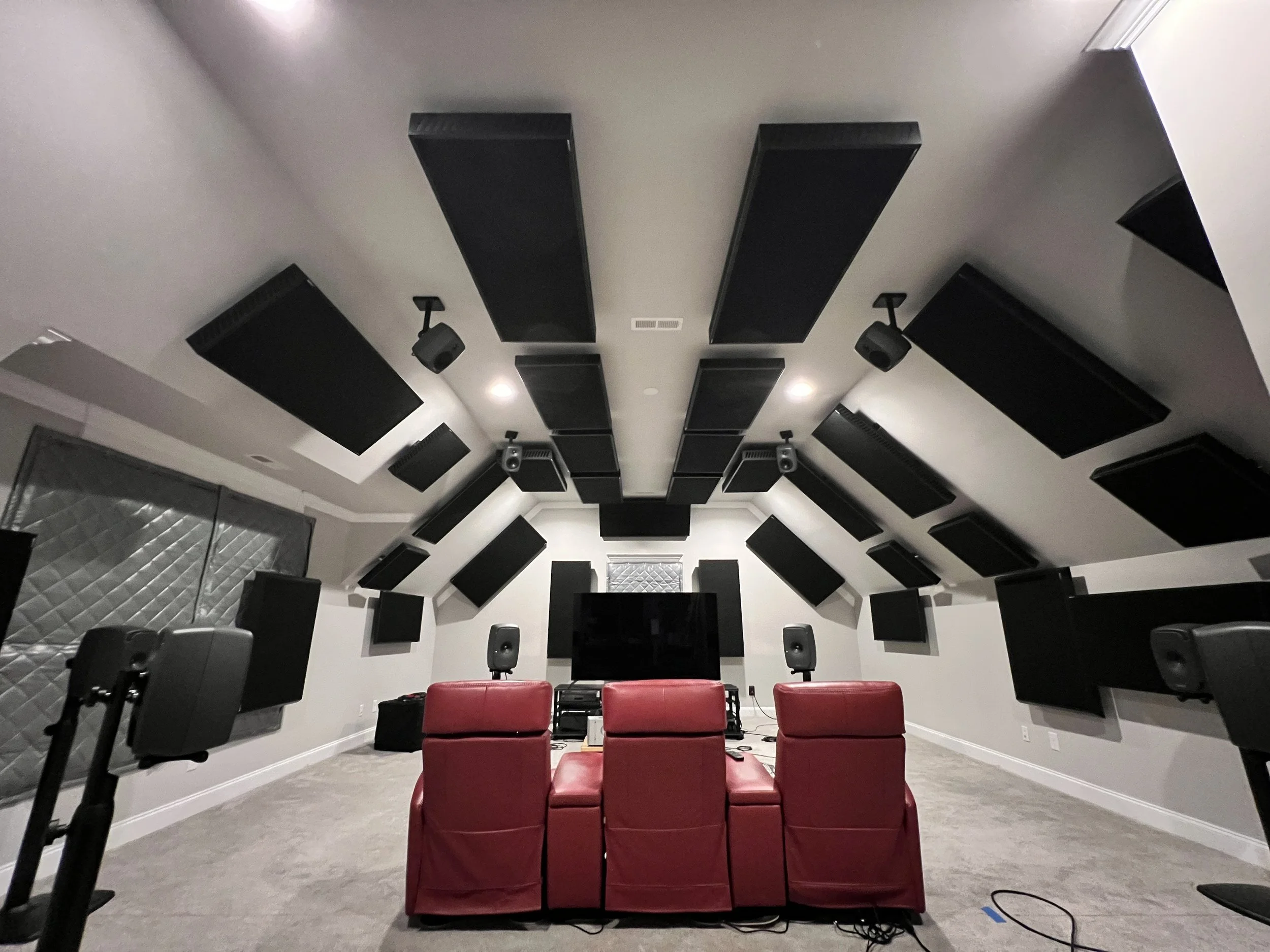
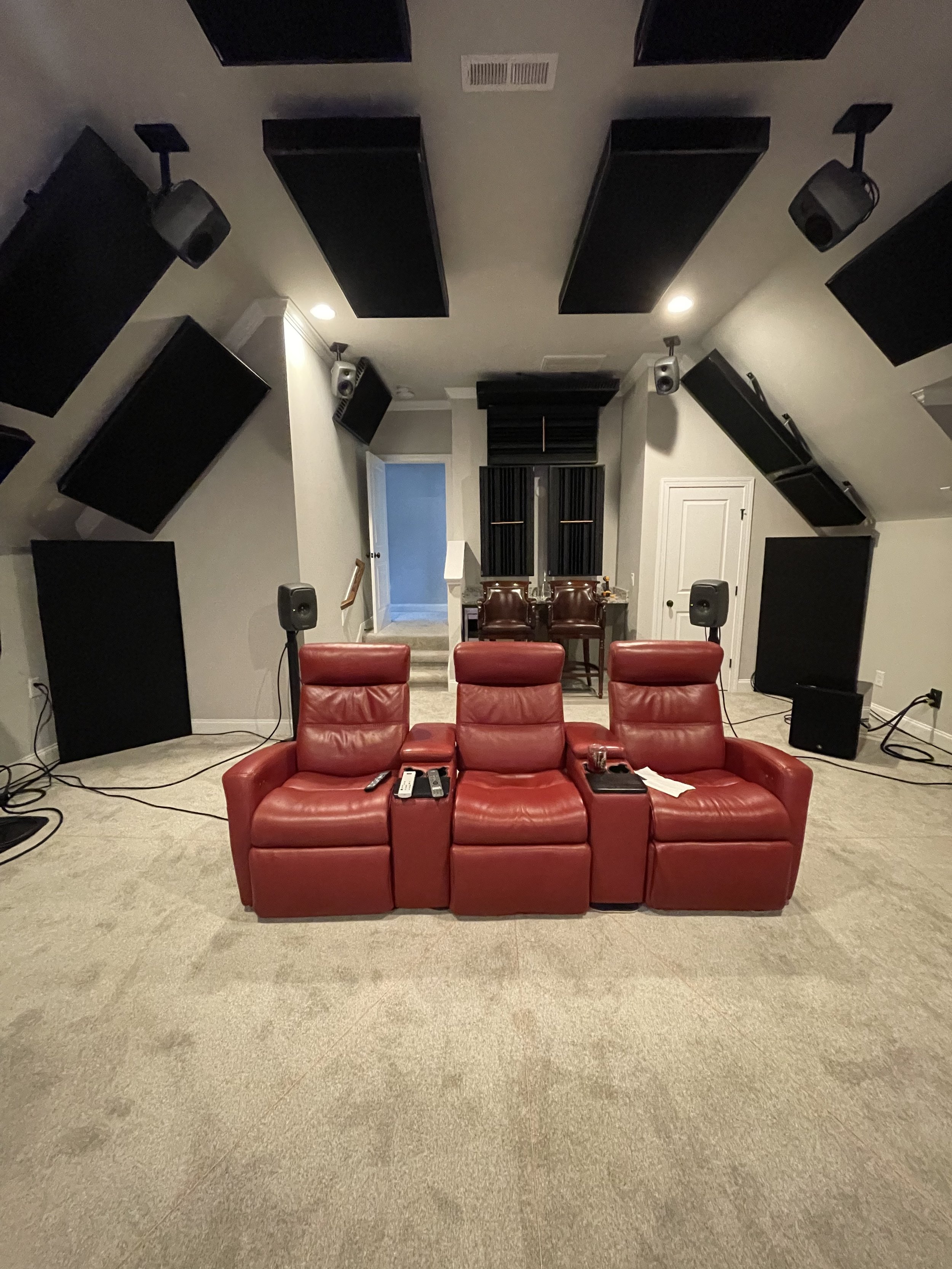
The client had a dedicated residential HiFi listening and home theater space with significant acoustic problems. Despite high-quality playback equipment, the room was working against the system — low frequency buildup, slow decay, and poor early reflection control were masking detail and fatiguing the listening experience.
THE PROCESS
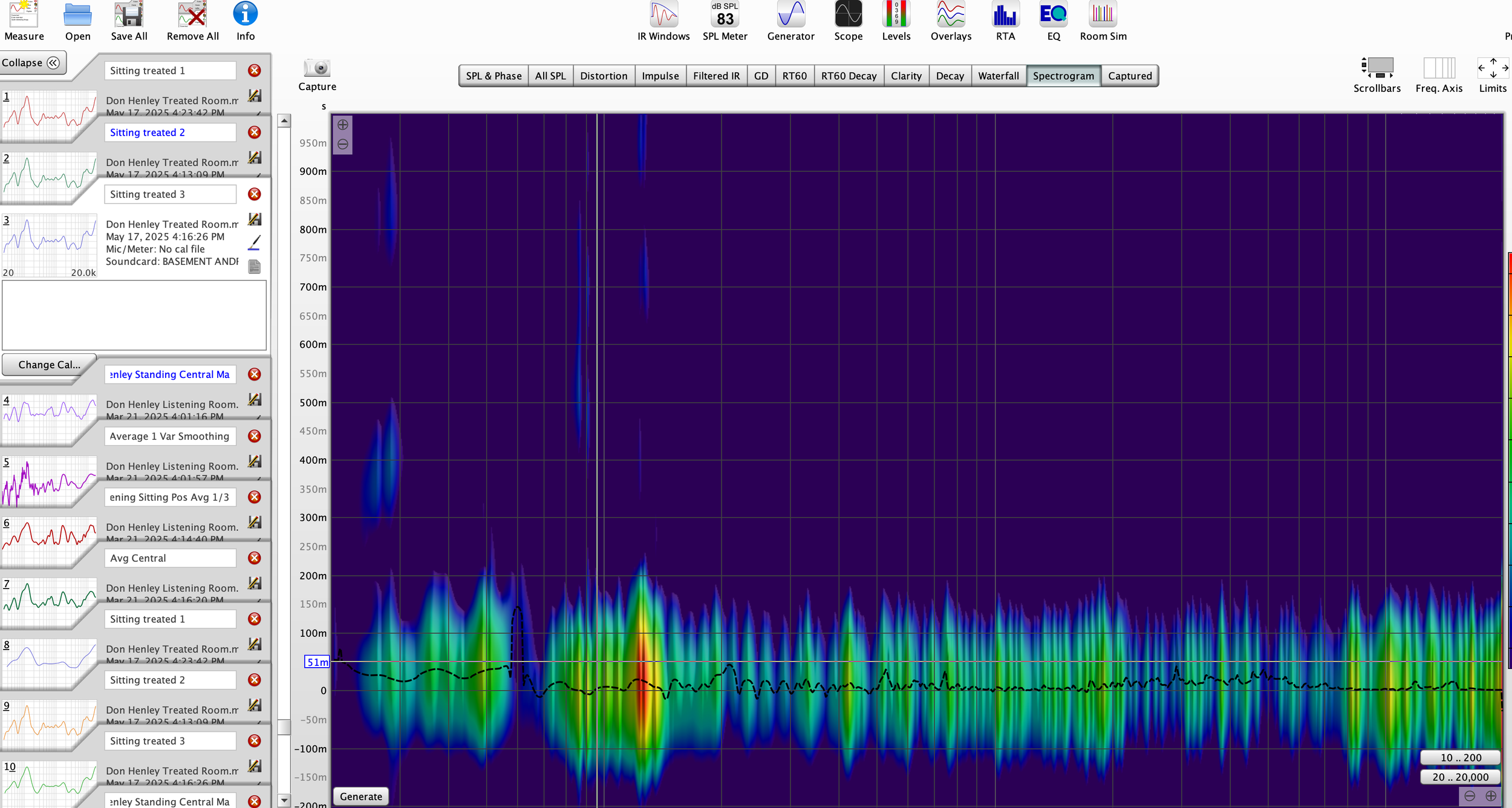
A full acoustic measurement campaign was conducted using REW V5.20.5 across five listening positions — center, left speaker axis, right speaker axis, sitting, and standing — capturing SPL, phase, clarity, RT60, impulse response, waterfall, and spectrogram data at each position.
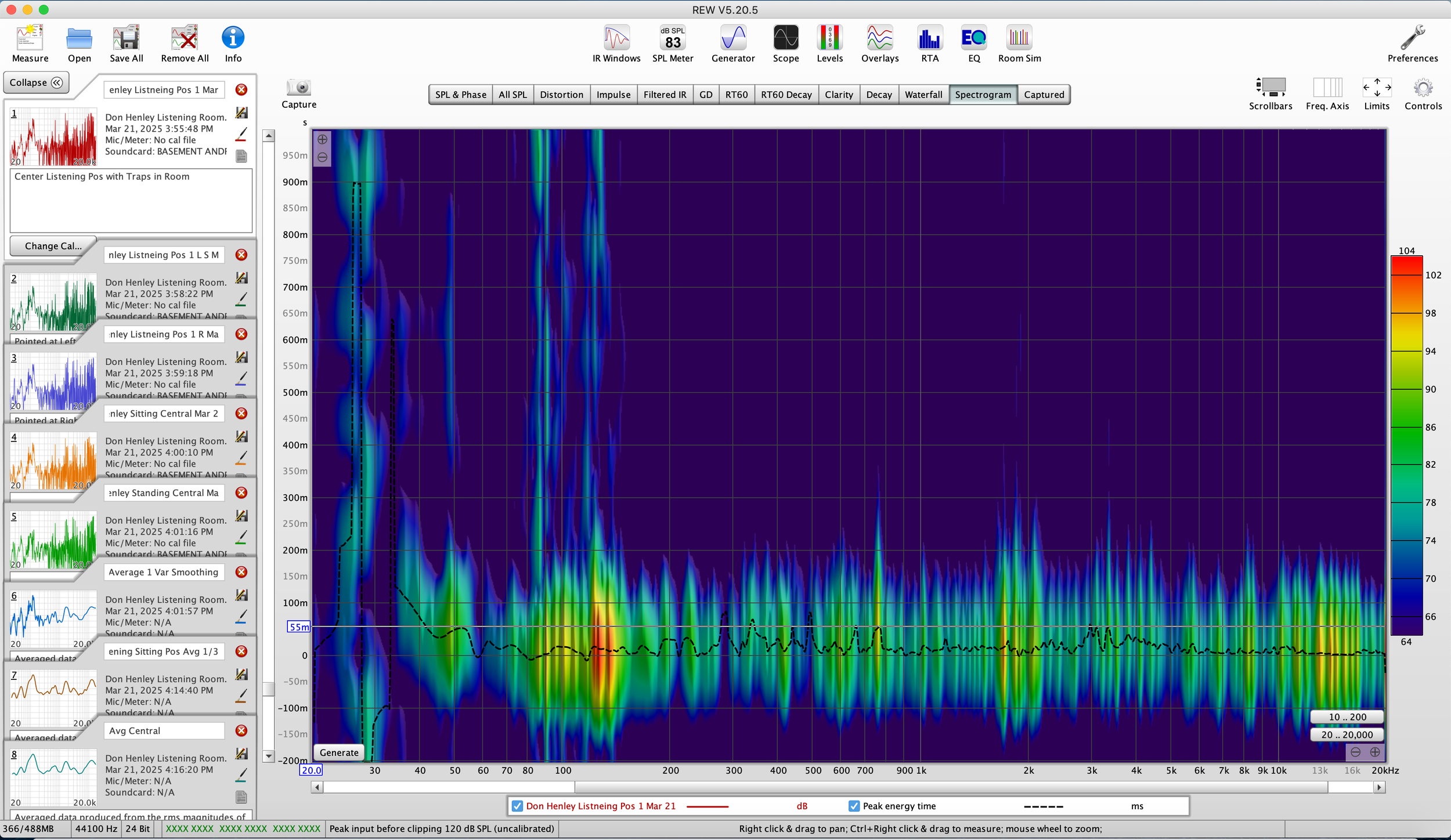
The multi-position approach revealed what a single measurement would have missed: significant modal stacking at ear height, with a 4dB SPL differential between sitting and standing at the primary listening position. Low frequency energy in the 80-250Hz band was averaging 9dB above the rest of the spectrum, with decay times extending well past 400ms below 100Hz.
Treatment was designed and implemented to address the identified problems at their root rather than masking them with EQ.
THE RESULTS
(display these as three stat callouts in teal)
EDT: 0.319s → 0.115s Early decay time reduced by 64% — sound stops coloring the room and starts serving the music
Clarity C80: 16.50dB → 26.03dB A 9.5dB improvement in musical clarity — detail that was buried in reflections is now fully resolved
Definition D50: 93.8% → 99.0% Near-perfect early energy concentration — the system sounds like itself for the first time
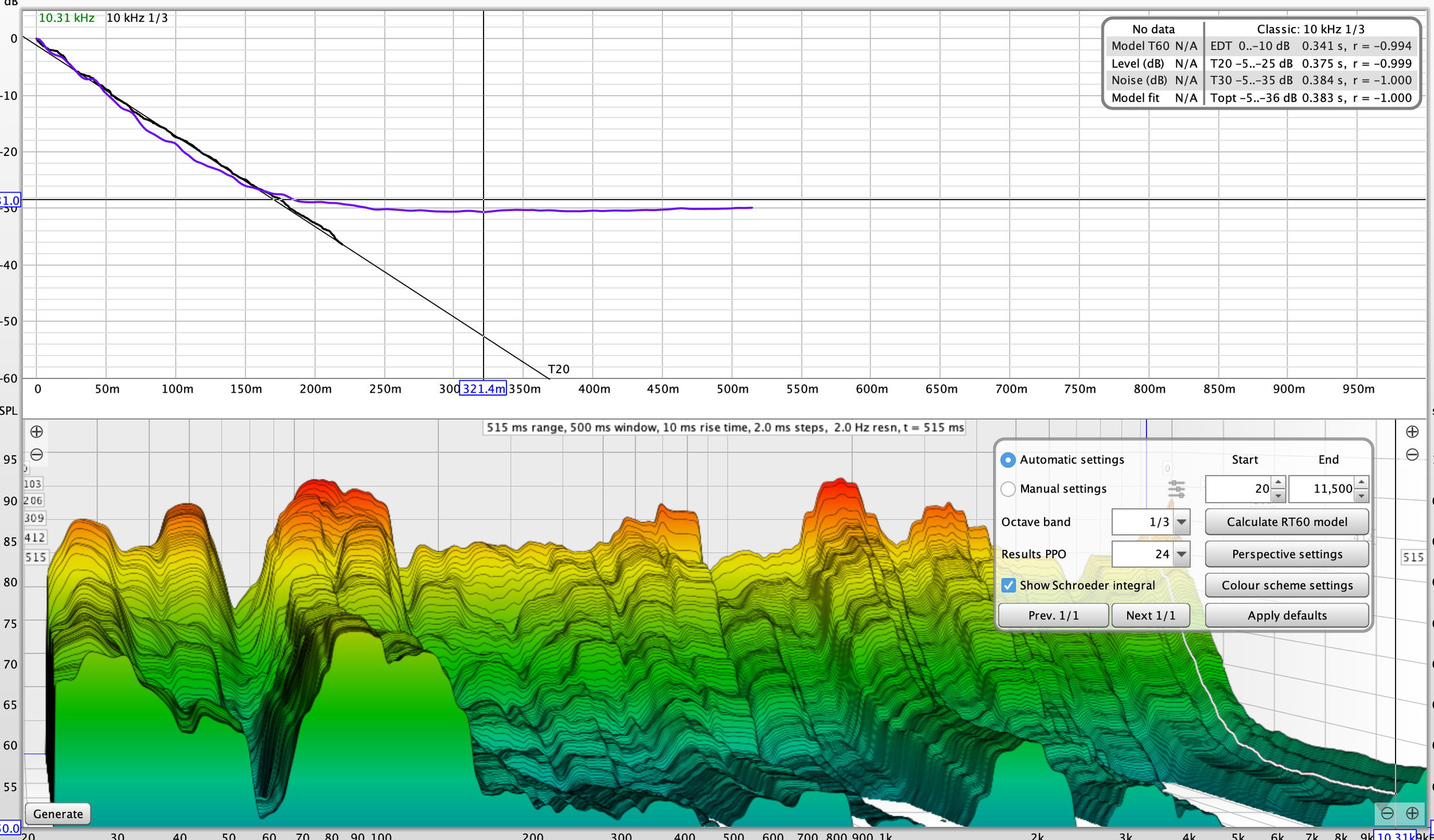
Before: slow, irregular decay.
RT-60 Analysis
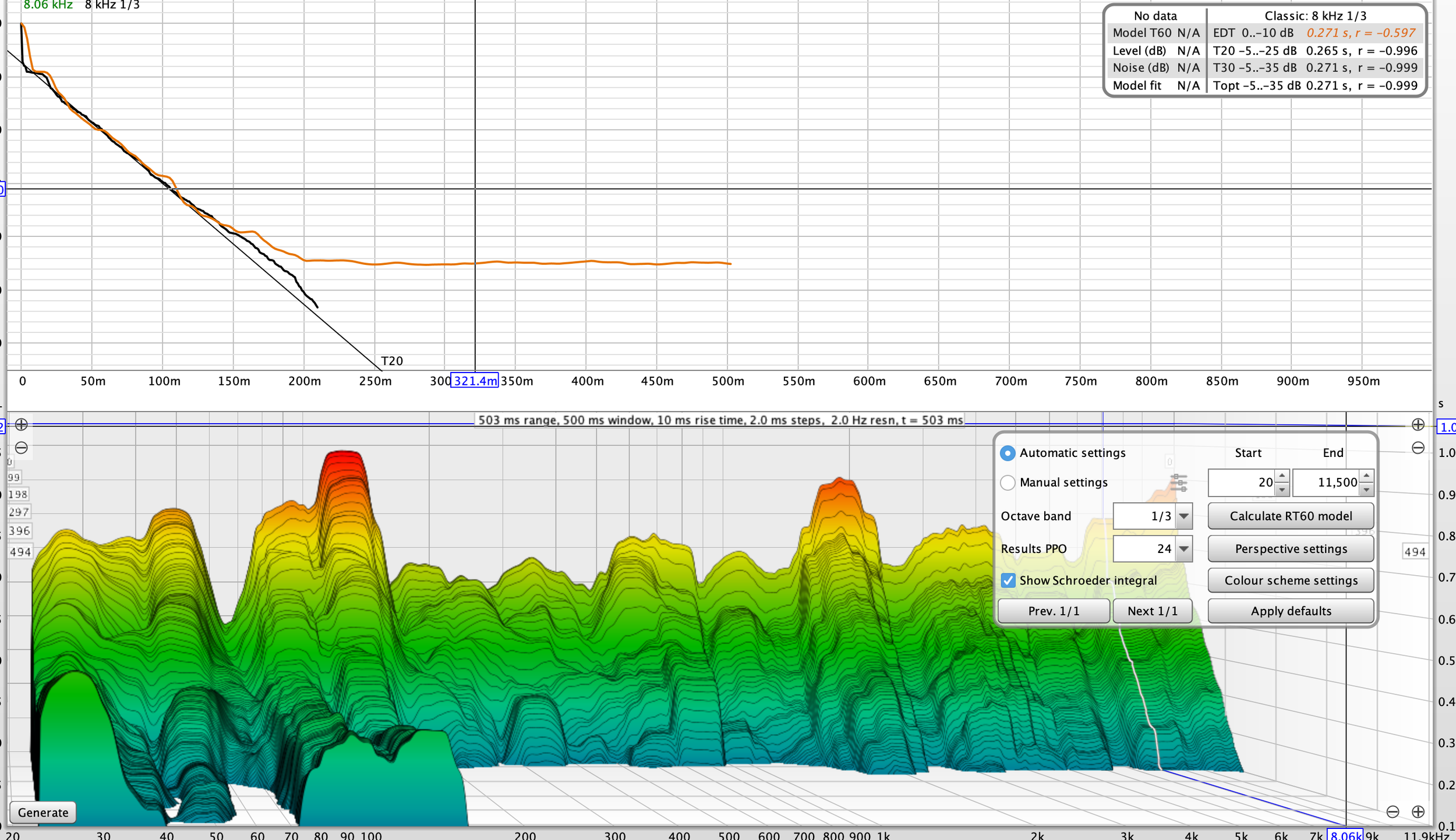
After: smooth, linear rolloff characteristic of a well-treated room.
Spectrogram Analysis
Have a space that needs to perform?